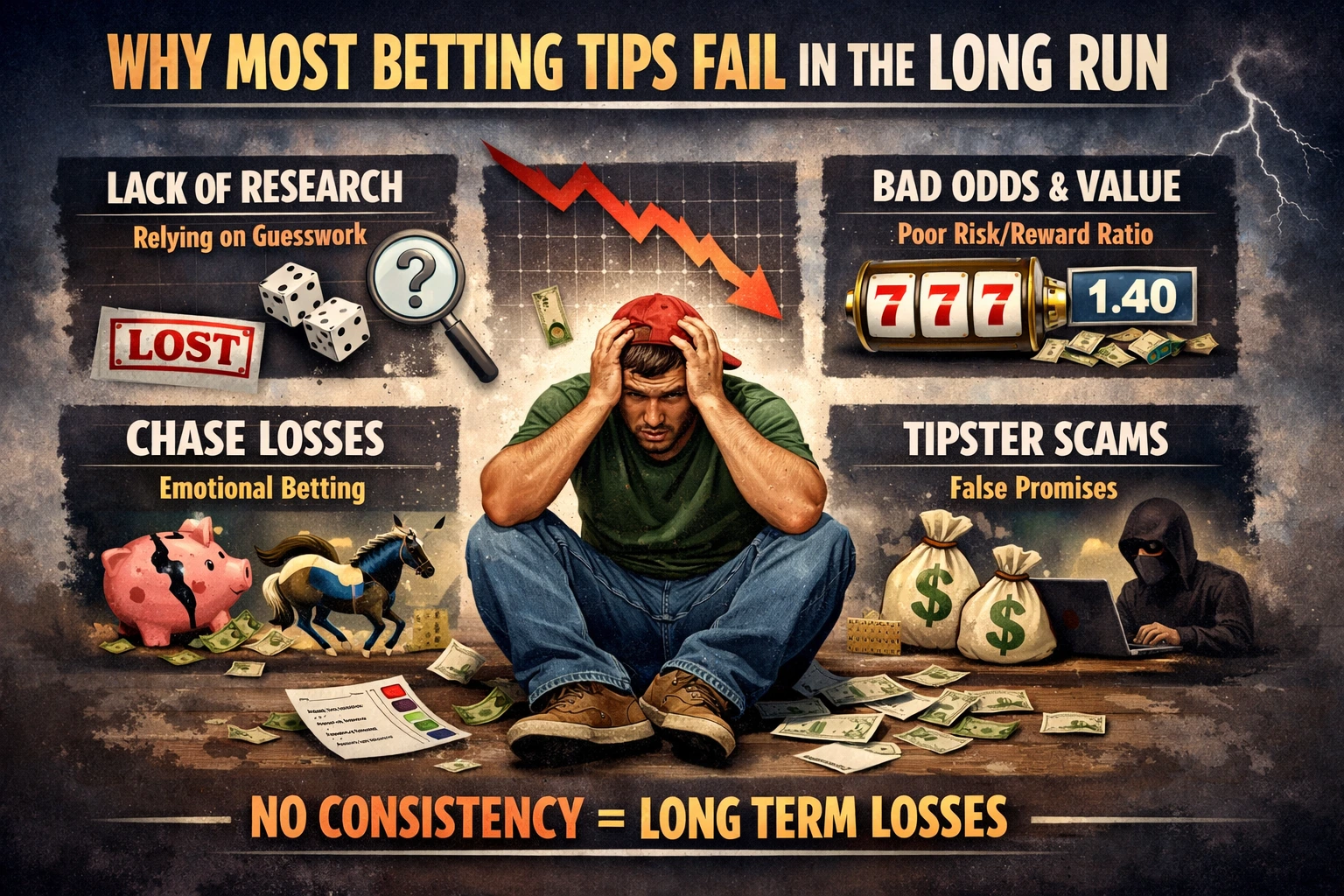
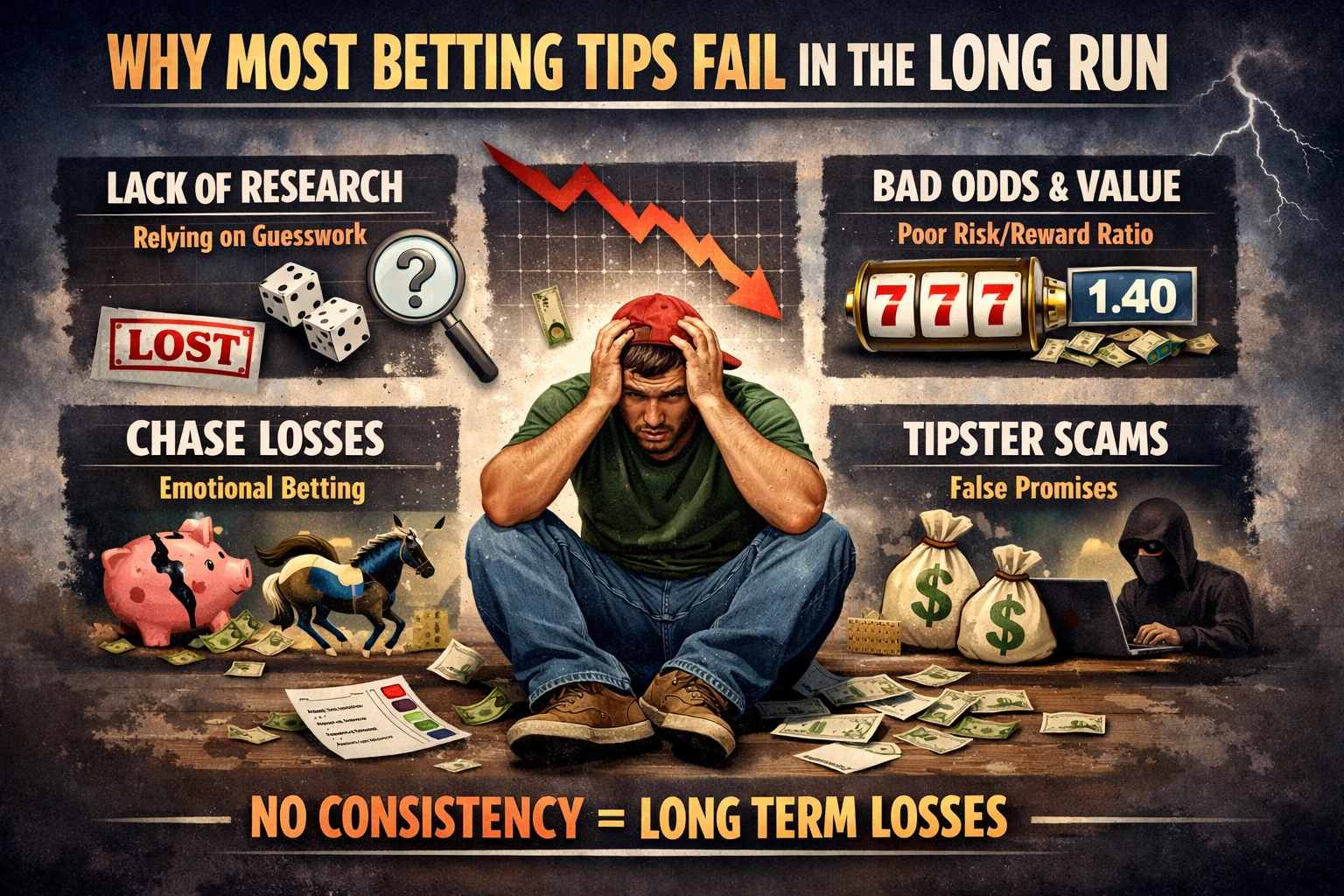
 Understanding why betting tips fail requires looking beyond individual predictions and examining how odds, incentives, psychology, and mathematics interact. Even on large platforms such as Lemon Casino, where markets are liquid and pricing is relatively efficient, following tips rarely produces long-term positive results.
The Mathematical Barrier: Odds Already Include the Margin
The first and most fundamental reason betting tips fail is simple: bookmakers price on their edge. Odds are not neutral probabilities; they are probabilities adjusted to guarantee a margin.| Concept | What It Means for Bettors |
| True probability | The real chance of an outcome occurring |
| Implied probability | Probability derived from bookmaker odds |
| Bookmaker margin (vig) | Built-in advantage for the house |
| Long-term expectation | Negative for most players |
Information Asymmetry Is Mostly Gone
In the past, insiders, journalists, or sharp bettors could exploit slow-moving information. Today, that edge has largely disappeared. Modern betting markets absorb information almost instantly:- Lineups, injuries, and suspensions update odds within seconds
- Weather, pitch conditions, and referee data are already priced in
- Syndicates and automated models react faster than individuals
Tipsters Are Incentivised to Sell, Not to Win
Most tipsters do not make money from betting. They make money from marketing. This creates a fundamental conflict of interest. Common revenue sources for tipsters include:- Subscriptions and “VIP” access
- Affiliate commissions per registration or deposit
- Revenue share deals with betting platforms
Short-Term Variance Creates the Illusion of Skill
One of the most dangerous aspects of betting tips is short-term success. Random variance can make bad strategies look profitable for weeks or even months.| Time Frame | What Often Happens |
| Short term (days/weeks) | Random wins dominate perception |
| Medium term (months) | Volatility increases, confidence remains |
| Long term (years) | Expected value takes over |
Most Bettors Misapply Tips Even If They Were Good
Even assuming a tip has theoretical value, most bettors fail to execute it correctly. Typical execution errors include:- Using flat stakes instead of proportional bankroll management
- Chasing losses after a bad run
- Combining tips into accumulators, destroying expected value
Market Efficiency Improves Over Time
Betting markets evolve. A strategy that worked last season often fails the next. Efficiency increases due to:- Better statistical models used by bookmakers
- Increased liquidity in popular leagues
- Sharper global participation
The Psychological Trap of External Authority
Betting tips appeal because they outsource responsibility. Instead of uncertainty, bettors get certainty — or at least the feeling of it. This creates psychological dependence:- Losses are blamed on bad luck
- Wins are credited to the tipster’s “expertise”
- Critical thinking decreases over time
Why Casinos Are Comfortable With Tip Culture
From an operator’s perspective, tip-driven betting is not a threat. It often increases turnover without increasing risk. Casinos benefit because:- Tip followers bet more frequently
- Accumulators and high-variance bets grow
- Long-term margins remain intact