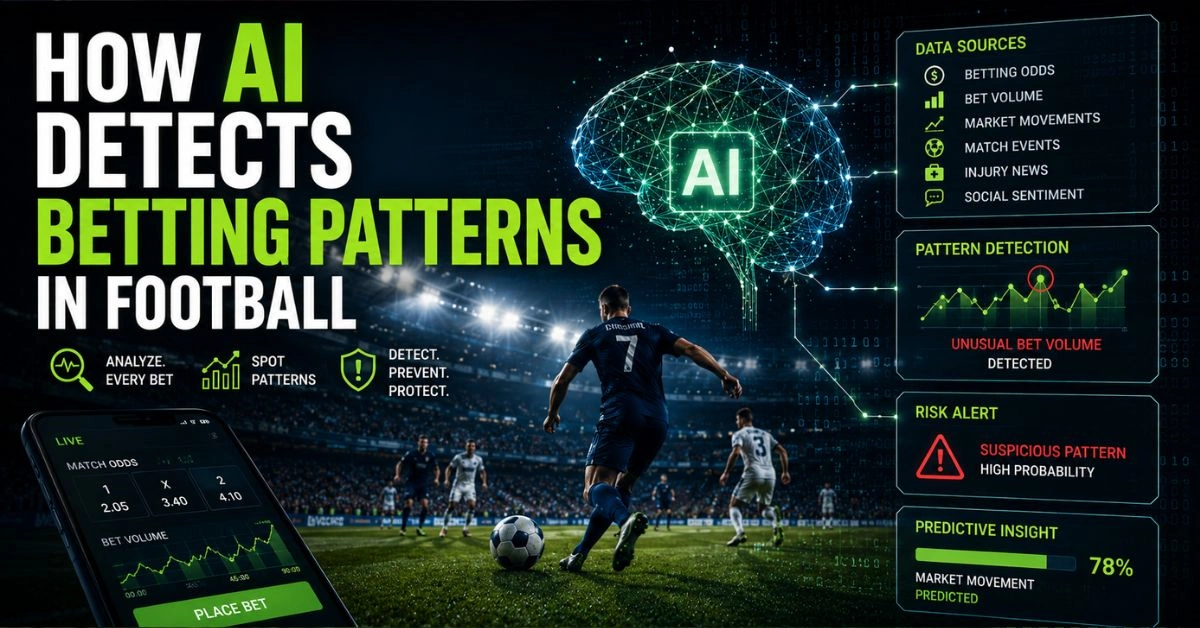
How AI Detects Betting Patterns in Football
Football betting is no longer just instinct, luck, and one suspicious uncle who knows the league. Modern AI watches markets like a financial exchange: odds movement, bet timing, public emotion, live-match pressure, and suspicious activity.
Around platforms such as RajBet, football bettors increasingly interact with automated systems that adjust prices, track behavior, and react faster than any human trader could.
The strange part? AI is not only studying football. It is studying how people behave when football makes them nervous.
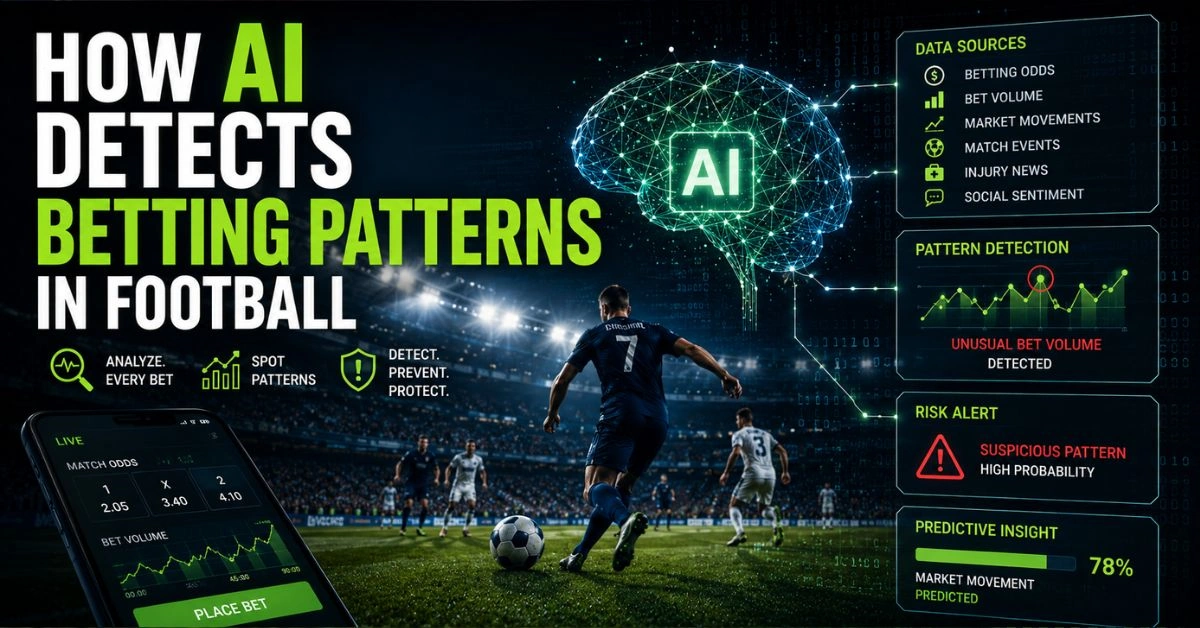
AI Reads Bettors Almost As Much As It Reads Football
AI in football betting does not simply ask, “Who will win?” That question is too basic. Modern systems ask something more useful: why are thousands of people suddenly betting this way, right now?
The match is only one layer. The crowd reaction is another layer. Sometimes the crowd is smarter than the odds. Sometimes the crowd is just emotional noise wearing a replica shirt.
| Betting Pattern |
What AI Detects |
Simple Explanation For Bettors |
Real Betting Meaning |
| Favorite-team bias |
Heavy money on famous clubs |
Big teams attract emotional bets even when value is weak |
Odds can become worse for casual bettors |
| Goal reaction spike |
Sudden live bets after a goal |
People chase momentum immediately |
Market may overcorrect |
| Late-game panic |
More bets after 75 minutes |
Bettors feel time pressure |
Live odds become volatile |
| Social-media influence |
Betting jumps after viral posts |
Predictions from influencers move casual money |
Public sentiment may distort prices |
| Derby emotion |
More impulsive betting in rivalry games |
Fans bet with identity, not logic |
Card, foul, and live markets become unstable |
| Parlay clustering |
Similar accumulator combinations |
Many users copy the same betting logic |
Operators see concentrated risk |
| Loss chasing |
Larger bets after failed picks |
Emotional recovery betting |
AI flags risky behavior patterns |
| Rumor reaction |
Odds move before confirmed news |
Bettors respond to leaks or speculation |
Market may shift before official updates |
| Weather panic |
Bets change after rain or wind reports |
People overreact to visible conditions |
Goal totals may move too aggressively |
A real example can be seen in the wider industry through companies such as Sportradar and
Stats Perform, which provide sports data, integrity monitoring, and live analytical systems used across football markets.
Their work shows how betting data is no longer passive information; it is monitored, compared, and interpreted continuously.
AI does not need to know that a bettor is angry. It only needs to see the pattern: faster clicks, bigger stakes, repeated live bets, and emotional timing. Humans call it “having a feeling.” The algorithm calls it a recognizable behavioral cluster.
What AI commonly studies inside bettor behavior:
- Bet timing: when users place bets before, during, or after major match events
- Stake changes: whether bet size suddenly rises after losses or late drama
- Market choice: whether users prefer goals, cards, corners, handicaps, or risky parlays
- Reaction speed: how quickly bettors respond to goals, red cards, VAR, or substitutions
- Device patterns: whether behavior changes on mobile during live games
- Repeated habits: whether the same type of bet appears every weekend
- Emotional triggers: whether users overbet after shock results or viral narratives
- Group behavior: whether thousands of users suddenly move in the same direction
- Risk concentration: whether too much money lands on one outcome or market
A RajBet-style live football environment is a good example of how these systems appear to normal users. Bettors see live odds, statistics, markets, and quick bet options. Behind that interface, automated systems may be comparing user behavior with market movement, historical data, and live-match signals.
The bettor sees the next goal: Team A. The machine sees volume, timing, probability, risk exposure, sentiment, and whether the market is starting to behave like a crowd running toward one small door.
Live Betting Is Where AI Becomes Fast, Weird, And Very Useful
Prematch betting gives AI time to compare teams, injuries, schedules, odds, and historical models. Live betting is different. It moves quickly, and football is rude enough to change completely in three seconds.
That is why AI in live football betting focuses on micro-patterns. A dangerous attack, a tactical switch, a tired full-back, or a sudden betting spike can all affect pricing before most viewers understand what changed.
| Live Signal |
What AI Reads |
Why Bettors Should Care |
Possible Market Effect |
| Shot quality rising |
Attacks are becoming more dangerous |
Not all shots matter equally |
Goal odds may shorten |
| Repeated box entries |
One team is sustaining pressure |
Momentum becomes measurable |
Next-goal markets move |
| Defensive mistakes |
Back line is losing structure |
Risk increases before obvious collapse |
Handicap odds adjust |
| Pressing intensity drops |
Players may be tiring |
Late goals become more likely |
Over/under markets shift |
| Substitution pattern |
Coach changes tactical plan |
Shape may change before score does |
Team probability recalculates |
| VAR delay |
Game rhythm breaks |
Emotion and discipline shift |
Card and penalty markets move |
| Sudden money spike |
Many bettors move together |
Could be news, emotion, or sharp action |
Odds may shorten quickly |
| Rain or wind change |
Technical quality may decline |
Passing and shooting accuracy shift |
Total goals may tighten |
| Crowd pressure |
Home atmosphere affects tempo |
Especially visible in derby games |
Cards, fouls, corners may rise |
A strong real-life example is Leicester City’s 2015–16 Premier League title run.
Traditional assumptions kept treating Leicester like an overperforming outsider for too long, while match data increasingly showed that their counterattacking efficiency, defensive discipline, and consistency were not random.
Modern adaptive models are better at reacting to that kind of repeated evidence instead of blindly respecting old reputations.
That matters because football markets are full of old reputations. Bettors love names. AI loves patterns. Sometimes the machine is boring and correct.
How live AI systems can separate useful signals from noise:
- Possession without threat: high possession, but no dangerous chances
- Real pressure: repeated entries into the box, shots from central zones, defensive scrambling
- Fake momentum: crowd noise and commentary hype without statistical danger
- Fatigue signal: slower pressing, late tackles, poor recovery runs
- Tactical signal: formation change, deeper defensive block, new attacking route
- Emotional signal: team loses discipline after conceding
- Market signal: odds move faster than visible match events explain
- Public signal: recreational bettors rush toward a dramatic narrative
- Sharp signal: unusual money appears early or in less popular markets
Live betting also creates a psychological trap. Bettors feel they are reacting faster because they are watching the match. But AI receives structured data faster than human perception can process it.
| Human Bettor Reaction |
AI Interpretation |
Who Usually Moves Faster? |
| “They look dangerous now” |
Pressure index already rising |
AI |
| “The defender seems tired” |
Sprint recovery and duel data declining |
AI |
| “The crowd is going crazy” |
Atmosphere noted, but checked against actual chances |
AI |
| “This team deserves a goal” |
Expected-goal model checks shot quality |
AI |
| “I feel a comeback” |
Historical comeback probability recalculated |
AI |
| “The odds are dropping” |
Market volume and source tracked |
AI |
| “Everyone is betting this” |
Public clustering detected |
AI |
| “This is free money” |
Risk alert quietly screams in machine language |
AI |
For normal bettors, the lesson is not “never trust your eyes.” Eyes are useful. The lesson is: your eyes are emotional, and AI is comparing your emotional reaction against thousands of previous emotional reactions.
In other words, you may be watching football. The model is watching you watch football. Slightly rude, but efficient.
AI Also Hunts Suspicious Betting Patterns
AI is not only used to create sharper odds. It also helps detect suspicious betting activity. This part matters because football betting is global, fast, and vulnerable in smaller competitions where less media attention exists.
Integrity systems used by organizations such as FIFA, UEFA, Sportradar, and other monitoring groups look for abnormal patterns across leagues, countries, accounts, and market types. The goal is not to guess who enjoys a risky bet.
The goal is to identify movement that does not fit normal football betting behavior.
| Suspicious Pattern |
Why AI Notices It |
Possible Concern |
Bettor-Friendly Explanation |
| Huge volume on obscure match |
Audience size does not match betting size |
Possible manipulation |
Too much money appears where little interest exists |
| Odds collapse without news |
Market moves before public information |
Insider information risk |
Someone may know something early |
| Niche market spike |
Money targets cards, corners, penalties |
Easier manipulation risk |
Small markets can be vulnerable |
| Synchronized accounts |
Many accounts behave identically |
Coordinated betting group |
Different users look strangely similar |
| Perfect timing live bets |
Bets placed seconds before key incidents |
Data leak or courtsiding concern |
Someone reacts too fast to be normal |
| Lower-league focus |
Repeated activity in weakly monitored leagues |
Match-fixing vulnerability |
Small competitions attract suspicious attention |
| Repeated referee markets |
Strange patterns around cards or penalties |
Officiating-related concern |
AI checks historical referee-market links |
| Account clusters |
Same devices, locations, or behavior |
Multi-account strategy |
Separate accounts may not be truly separate |
| Abnormal profit curve |
User beats market unusually often |
Sharp or suspicious activity |
Winning too perfectly can also look odd |
This does not mean every successful bettor is suspicious. Good bettors exist. Lucky bettors also exist, usually for shorter periods and with louder group chats. AI looks for combinations, not one isolated win.
Behavioral red flags integrity systems may study:
- Repeated bets on obscure lower-tier football matches
- Sudden high stakes in markets with normally low volume
- Multiple accounts placing similar bets within seconds
- Betting activity before official lineup or injury news appears
- Very accurate live bets before visible match events
- Accounts avoiding popular markets but attacking niche ones
- Geographic clusters betting the same unusual outcomes
- Repeated success against closing odds in strange markets
- Device or payment patterns connecting separate accounts
This is where betting starts to resemble fraud detection in banking. One unusual transaction is not always a problem. A repeated pattern across timing, value, location, account behavior, and outcome becomes much harder to ignore.
| Normal Bettor Behavior |
Suspicious-Looking Behavior |
Why The Difference Matters |
| Bets on popular matches |
Focuses only on obscure games |
Obscure games are easier to manipulate |
| Wins and loses unevenly |
Wins unusually often in niche markets |
Pattern may exceed normal variance |
| Reacts after visible events |
Bets just before key events |
Timing may suggest information advantage |
| Uses varied markets |
Repeats same small vulnerable market |
Narrow targeting can look coordinated |
| Bets emotionally sometimes |
Bets with machine-like consistency |
Automation or syndicate behavior possible |
| Follows public football news |
Moves before public news |
Possible insider source |
| Has mixed stake sizes |
Uses structured stake patterns across accounts |
Account-linking risk |
| Bets mostly on big leagues |
Attacks low-liquidity matches |
Low-liquidity markets move more easily |
For everyday bettors, this matters because AI-based monitoring helps keep markets cleaner. Nobody wants to bet into a match where the real action happened before kickoff in some invisible betting network.
The uncomfortable part is that the same systems making betting smoother also make it more observed. Football betting used to feel like a private argument with probability. Now probability has surveillance software and excellent memory.
Conclusion
AI detects football betting patterns by reading markets, match data, timing, emotion, and suspicious behavior together. It does not only study teams; it studies people reacting to teams.
For normal bettors, that means live betting is faster, sharper, and less forgiving than ever. The future will not remove emotion from football betting. It will simply measure it better than we do.